In our last blog, we discussed the causes of tooth loss and its side effects. If you missed it, it’s worth reading before this.
Now let’s talk about the part that actually matters most: how to prevent tooth loss in the first place.
The good news is that most tooth loss doesn’t happen overnight. It builds up slowly from small things that go unnoticed for years. Once you know what to watch for, prevention becomes a lot easier.
Start With the Basics, But Do Them Right
Brushing twice a day and flossing daily is the foundation.
But most people brush the flat surfaces of their teeth and skip the gumline, and that’s exactly where plaque turns into tartar and gum disease begins. Angle your brush toward the gums, not straight at the teeth.
A soft-bristled or electric toothbrush works better than scrubbing hard, since hard brushing wears down enamel and pushes gums back over time. To prevent gum disease before it starts, protect the gumline.
Pay Attention to Dry Mouth
Saliva does more than keep your mouth comfortable. It washes away food particles and neutralises the acid that eats into your enamel. When your mouth runs dry, that protection disappears, and your risk of decay can rise quickly.
Often, dry mouth and tooth decay show up together, and dry mouth isn’t always something you’re doing wrong.
Many blood pressure medications, antihistamines, and antidepressants cause it as a side effect. If your mouth feels dry more often than not, mention it at your next dental visit, even if nothing hurts yet.
Know the Link Between Gum Disease and Diabetes
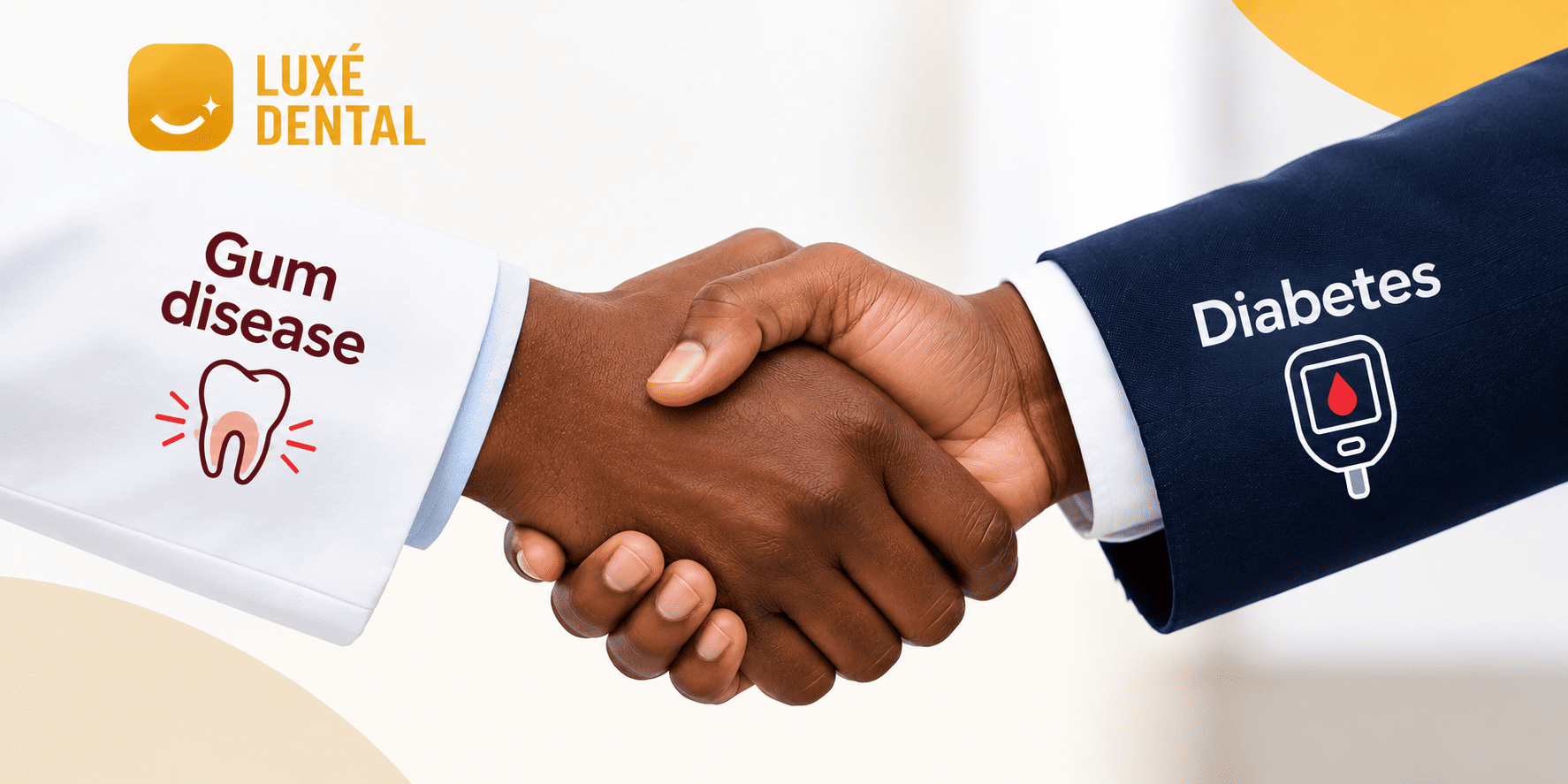
If you have diabetes or prediabetes, your dental health deserves extra attention. Gum disease and diabetes work against each other in both directions.
High blood sugar makes gum infections harder to fight off, and gum infections make it harder to keep blood sugar under control. This is one of those connections people don’t make until a dentist points it out.
If you’re managing diabetes, treat your dental checkups as part of that management, not something separate. The CDC notes that adults with certain chronic conditions are more likely to experience tooth loss, which is exactly why this link is worth taking seriously.
Avoid Teeth Grinding
Many adults grind or clench their teeth at night without realising it. Over time, this wears down enamel, cracks teeth, and loosens the tissue holding them in place.
Grinding is often more of a stress or sleep issue than a dental one. You can use a nightguard to protect your teeth in the meantime, but if the grinding keeps happening, it’s better to address the cause.
Tell Your Dentist What Medications You’re On
If you’re on medication for osteoporosis, your dentist needs to know before any extraction or implant work. In rare cases, these medications have been linked to a jaw condition that slows healing after dental surgery.
It’s an easy detail to overlook, since most people don’t connect bone medication to their teeth. But it can change how your dentist approaches treatment, so don’t leave it out during your visit.

Keep Up With Regular Checkups
Even with a good routine at home, some problems only show up on an X-ray or under a dentist’s trained eye.
Early-stage gum disease, gingivitis, often causes no pain at all. You might just notice a little bleeding when you brush, and that’s easy to dismiss.
Catching it early is what makes it treatable. Waiting until it hurts usually means the damage has already started. Regular checkups are how you stay ahead of it instead of reacting to it.
The Bottom Line
Preventing tooth loss is more about paying attention to the small signals your mouth gives you and not ignoring them.
Bleeding gums, dry mouth, a jaw that aches in the morning, or a tooth that feels slightly loose are all worth mentioning to your dentist, even when they don’t seem urgent.
At Luxe Dental, a team of seven experienced dentists is ready to give your mouth the attention it deserves. If it’s been a while since your last checkup, or if something has felt off and you’ve been putting it off, now is a good time to change that.
Schedule an intensive oral health checkup with us today.
Frequently Asked Questions You Might Have
-
How many times should I brush my teeth daily?
To prevent tooth loss and decay, the American Dental Association recommends that you brush your teeth 2x daily for 2 minutes each time.
-
Can diabetes affect your teeth?
Yes, it can. The high level of sugar in your saliva can help bacteria grow rapidly. At the same time, the dry mouth lowers your mouth’s ability to wash out food and acids.
-
Can a dentist tell if you’re diabetic?
Yes, a dentist can tell if you’re diabetic. Diabetic patients often experience severe gum diseases, slow-healing mouth sores, and dry mouth.